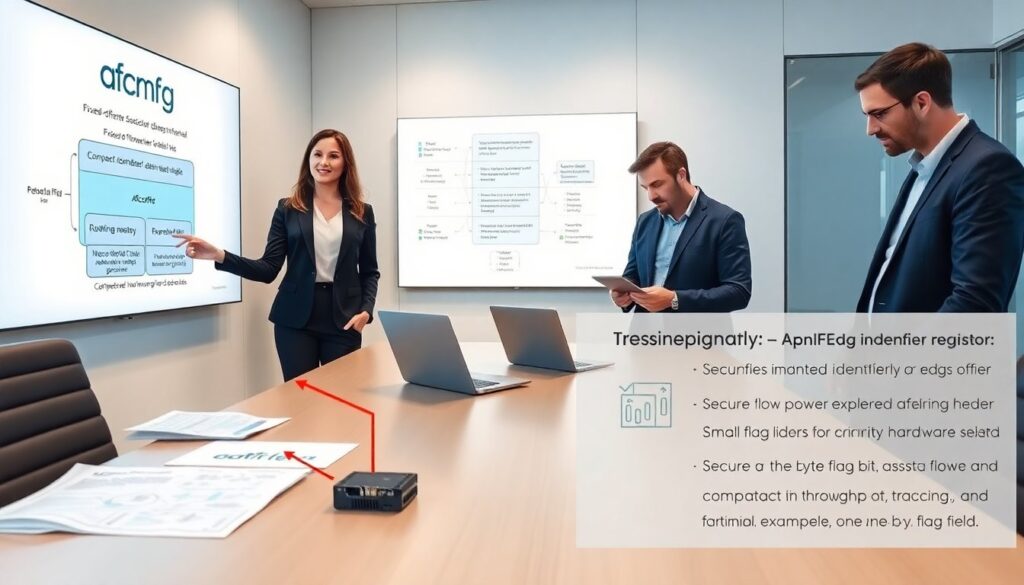

afcnrfg describes a specific data protocol that teams adopt for efficient signal routing. It defines message formats and routing rules. It reduces latency and helps systems share state. It fits where simple, predictable routing matters. The following sections describe its origins, practical uses, and common risks. Readers will get a clear, actionable view of afcnrfg and how teams apply it in 2026.
Table of Contents
ToggleKey Takeaways
- Afcnrfg is a data protocol that enables fast, predictable signal routing by using compact identifiers and fixed-offset parsing to reduce latency and CPU usage.
- Industries like IoT, industrial sensors, and private networks adopt afcnrfg for efficient telemetry, local command routing, and handling millions of short flows with minimal overhead.
- Implementing afcnrfg involves assigning simple identifiers, updating routing tables, validating frames, and monitoring performance metrics like latency and packet loss for effective deployment.
- Common challenges include identifier collisions, uncontrolled table growth, and security vulnerabilities, which can be mitigated by governance, access controls, and encrypted updates.
- Best practices for afcnrfg include using fixed field sizes, enforcing staged rollouts with fallback plans, conducting interoperability tests, and maintaining clear documentation and regular audits.
Origins And Core Concept Of AfcNRFG
afcnrfg started as a lean routing idea in a small research group. The group tested simple headers for fast lookups. They used fixed-length tags and small state tables. The tags let routers make direct forwarding decisions. Early tests showed fewer cache misses and lower processing overhead. The core concept uses compact identifiers and deterministic rules. It maps identifiers to delivery paths. It keeps packets small and processing predictable. Developers later standardized a minimal frame format. The format placed the identifier at a fixed offset. That choice simplified parsing in low-power devices. Implementers also defined a small set of control flags. Those flags marked priority, fragmentation, and optional tracing. The design avoided dynamic negotiation. This decision kept implementations lightweight. Hardware teams built low-cost parsers that matched the format. Software teams wrote simple libraries that validated frames and updated local tables. Over time, vendors added extensions for encryption and telemetry. Those extensions preserved the identifier position. The extensions used reserved flag bits and separate option blocks. This approach allowed gradual adoption without breaking older nodes. Researchers measured throughput gains for common traffic patterns. They found higher throughput when routes reused table entries. The pattern matched many industrial and IoT deployments. As a result, afcnrfg gained traction where predictability and low overhead mattered.
Practical Applications And Use Cases
Systems adopt afcnrfg when they need fast, predictable forwarding decisions. Industrial sensors use afcnrfg to send telemetry with minimal processing. Edge gateways use afcnrfg to route local commands with low jitter. Private networks use afcnrfg to keep control planes simple. Content caches use afcnrfg to tag popular objects for direct delivery. Network operators use afcnrfg to handle millions of short flows with low CPU cost. Software developers use afcnrfg libraries to map business identifiers to routes. Security teams use afcnrfg traces to audit delivery paths. The protocol also suits constrained devices that cannot parse complex headers. Vendors deploy afcnrfg in firmware for faster boot and network join. Enterprises deploy afcnrfg in dedicated control networks to reduce interference. Below is a step-by-step implementation example that shows how an English-speaking engineering team can get started with afcnrfg.
Step-By-Step Implementation Example For English-Speaking Users
An engineering team plans to add afcnrfg to an existing sensor network. The team selects a simple identifier format and reserves one byte for flags. They assign identifiers to sensor groups and to control endpoints. The team updates the edge gateway to inspect the identifier at the fixed offset. The gateway applies a local table lookup and forwards frames to mapped ports. The team adds a small validation library to each sensor. The library checks the identifier and sets the priority flag when needed. The team runs tests that measure latency and packet loss. They compare results with the previous routing method. The team documents the identifier assignments and controls access to the mapping table. They enable passive tracing for the first month to verify delivery paths. The team automates table updates via a secure API. They limit table size to match gateway memory. They add rate limits to avoid table thrash. After a staged rollout, the team notices lower CPU use on gateways and reduced end-to-end delay. The team refines identifier assignments to reduce collisions. They keep a migration plan to fall back to the old routing method if issues appear.
Common Challenges, Risks, And Best Practices
Users face a set of common challenges when they deploy afcnrfg. They may assign identifiers poorly, which leads to collisions. They may let routing tables grow uncontrolled, which causes memory pressure. They may skip authentication and expose mappings to attackers. They may extend the format in incompatible ways and break older nodes. Operators must plan identifier governance and table limits. They must enforce access controls on mapping APIs. They must test fallbacks before wide deployment. They must set monitoring that counts misses, collisions, and table churn. They must measure latency and CPU trends to detect regressions. For security, teams must sign configuration updates and encrypt option blocks. They must rotate keys on a schedule and log access events. For reliability, teams must carry out health checks that detect parsing errors and re-route flows. For performance, teams must keep identifier lookups O(1) and avoid linear scans. Teams should use fixed offsets and fixed field sizes to keep parsing simple. Teams should use staged rollouts and maintain a rollback path. Teams should run interoperability tests across vendor devices. Teams should document every assigned identifier and publish a clear registry for operators. Finally, teams should audit deployments annually and prune unused identifiers to free table space.