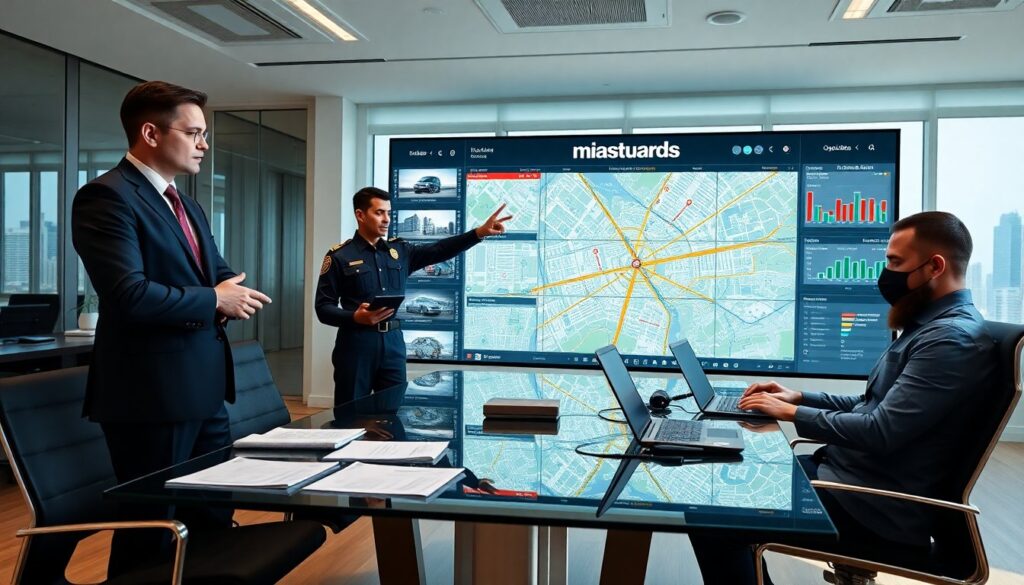

Miastuards offers a unified platform for urban safety. City officials and public safety teams use miastuards to collect data, detect threats, and coordinate response. The platform started as a pilot tool and grew into a system for traffic safety, crime reduction, and public event monitoring. This article explains what miastuards does and how cities use it.
Table of Contents
ToggleKey Takeaways
- Miastuards is a unified urban safety platform that integrates camera feeds, sensors, and public reports to detect threats and coordinate emergency responses efficiently.
- Cities use miastuards to improve traffic management, reduce crime, monitor public events, and enhance overall public safety through real-time data analytics and incident visualization.
- The platform shortens incident detection times and optimizes resource deployment, which helps cities lower operating costs and build public trust with transparent reporting.
- Miastuards supports role-based access, encrypted logs, and API integrations, allowing city planners, law enforcement, and businesses to leverage data for security and planning purposes.
- When choosing a miastuard solution, cities should ensure compatibility with existing systems, verify data security, assess model accuracy, and conduct pilots to measure impact before full deployment.
What Are Miastuards? Definition, Origins, And Use Cases
Miastuards is a software and hardware platform for city security. It ingests feeds from cameras, sensors, and public reports. The system analyzes data and flags incidents. Early versions of miastuards began as a university research project. Municipal pilots proved the model in traffic and crowd control. Today, miastuards runs in mid-size and large cities for traffic management, crime detection, environmental alerts, and event safety. Officials use miastuards to reduce response time and to allocate patrols. Businesses use miastuards to protect assets. Residents use miastuards to report hazards.
Core Features And Capabilities Of Modern Miastuards
Miastuards offers real-time monitoring and historical analytics. The platform provides dashboards for incident visualization. It supports role-based access for police, city operations, and first responders. Miastuards integrates alerts with dispatch systems and mobile apps. The platform stores encrypted logs for audits and compliance. It supports geofencing, automated alerts, and multi-camera correlation. Miastuards also offers APIs for third-party integrations. City planners use these APIs to export data for planning. Security teams use the platform to run investigations and to gather evidence.
How Miastuards Work In Practice: Data Flow And Incident Response
Sensors and cameras send raw data to local gateways. The gateways run filters and send events to the miastuards core. The core correlates events and scores incidents by severity. The platform notifies operators and dispatch systems when the score crosses thresholds. Operators validate incidents and assign responders. Miastuards logs every action and updates incident status in real time. The system streams live feeds to mobile units on request. It also generates automated after-action reports for review.
Benefits For Cities, Businesses, And Residents
Miastuards shortens incident detection and reduces response time. Cities use miastuards to deploy resources more efficiently. Businesses use miastuards to protect property and to manage deliveries. Residents use miastuards to report hazards and to receive timely alerts. The platform lowers operating cost by automating routine monitoring. Miastuards helps improve public trust when cities share transparent incident summaries. The system also supports targeted public safety campaigns based on data trends.
How To Evaluate And Choose The Right Miastuard Solution
Buyers should match miastuards to city needs before procurement. They should check compatibility with existing cameras and dispatch systems. Buyers should evaluate model accuracy on local data and check false positive rates. They should verify data security, encryption, and access controls. Buyers should require clear SLAs for uptime and for support response. They should confirm the vendor provides operator training and regular model updates. Cities should run a short pilot and should measure impact on response time and on community complaints.