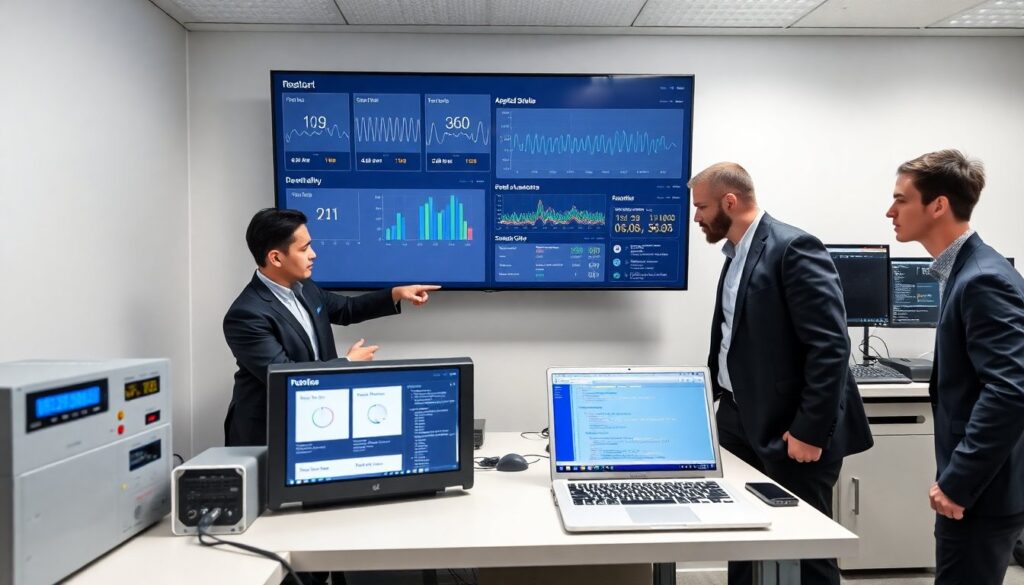

Tresettestar is a practical test method that measures system stability and performance. The term refers to a set of repeatable checks that teams run to confirm behavior. Researchers and engineers adopted the term in recent years. This article defines tresettestar, shows core features, and gives a clear how-to for accurate use in 2026. It aims to help teams apply tresettestar reliably and interpret results with confidence.
Table of Contents
ToggleKey Takeaways
- Tresettestar is a repeatable test method that measures system stability by cycling through reset, input application, and output measurement.
- Defining precise reset states, controlled inputs, and clear metrics is crucial for effective tresettestar execution.
- Automating the test loop and running multiple cycles ensures reliable detection of faults and consistent results.
- Avoiding common mistakes like vague resets, uncontrolled inputs, and insufficient logging maintains tresettestar accuracy.
- Analyzing tresettestar results helps identify system issues such as latent faults, state leaks, or hardware instability.
- Integrating tresettestar into continuous integration pipelines and using dedicated tools enhances early regression detection and test scalability.
What ‘Tresettestar’ Means And Where The Term Comes From
Tresettestar began as a lab label for a repeatability test. Early papers used tresettestar to name a cycle of reset, stimulus, and measurement steps. Engineers shortened the phrase into one word. Today teams use tresettestar to describe a formal loop: reset the system, apply a controlled input, and record output. The term now appears in technical docs and tool names. Histories credit a 2019 conference paper for popularizing tresettestar. Practitioners kept the name because it clearly links to the three-step sequence the method uses.
Key Features And Practical Uses Of Tresettestar
Tresettestar focuses on repeatability, control, and simple measurement. The method requires a defined reset state, a precise input, and an agreed output metric. Teams adopt tresettestar for regression checks, hardware validation, and software stability testing. It fits continuous integration pipelines and lab benches. Tresettestar works for low-level firmware tests and for integration smoke tests. The method scales from single-device checks to fleet validation when teams script resets and collect metrics centrally. Its value comes from consistent setup and clear pass/fail criteria.
How To Perform A Reliable Tresettestar: Step-By-Step Guide
Step 1: Define the reset state. The team records exact conditions for system start. Step 2: Select the input. The team chooses a repeatable stimulus that matches real use or a boundary condition. Step 3: Choose metrics. The team picks measurable outputs and sampling windows. Step 4: Automate the loop. The team scripts reset, apply input, and capture logs. Step 5: Run enough cycles. The team runs multiple iterations to measure variance. Step 6: Store results. The team saves raw logs and summary metrics for analysis. These steps keep tresettestar consistent and auditable.
Common Mistakes To Avoid When Using Tresettestar
Mistake 1: Vague reset description. Teams that skip exact reset steps see inconsistent outcomes. Mistake 2: Uncontrolled inputs. Random or drifting stimuli mask real faults. Mistake 3: Too few cycles. Single runs hide intermittent errors. Mistake 4: Ignoring environmental factors. Temperature and power variance change results. Mistake 5: Overlooking logging. Sparse logs limit root-cause work. Mistake 6: Using loose pass criteria. Vague thresholds produce false positives and false negatives. Avoid these errors to keep tresettestar results trustworthy.
Interpreting Results: What Outcomes Mean And Next Steps
A stable pass across cycles indicates acceptable behavior under the tested condition. Increased variance suggests a latent fault or an environmental influence. Systematic drift across runs points to state leakage or resource buildup. Isolated failures may indicate flaky hardware or timing issues. When results fail, the team narrows scope with focused tests. They isolate reset steps, change input magnitude, and extend logging. The team repeats tresettestar after changes to confirm fixes. Clear versioning of firmware, test scripts, and test rigs helps reproduce outcomes and track progress.
Tools, Resources, And Best Practices For Accurate Tresettestar
Use automation frameworks to run tresettestar at scale. Tools that control power, serial consoles, and network state reduce manual error. Use structured logging and a central database for metrics. Employ statistical summaries, such as mean, standard deviation, and failure rate. Keep test fixtures labeled and calibrated. Version control test scripts and test data. Run tresettestar in CI jobs to catch regressions early. Share templates and checklists across teams to keep methods consistent. Regularly review thresholds and update them when product behavior or hardware changes.
Case Examples: Real-World Scenarios And Lessons Learned
Example 1: A device maker ran tresettestar on boot times. They found a 15% slow-down after a firmware patch. They rolled back and fixed a memory leak. Example 2: A network team used tresettestar to test failover. They discovered a race during reset and added a short delay in the reset sequence. Example 3: A cloud provider ran tresettestar on VM images and caught an image corruption caused by a packaging script. Each example shows that regular tresettestar catches regressions early and saves time in later debugging.